
Why the Strait of Hormuz still shapes global conflict

How control of the Strait of Hormuz has shaped conflict for centuries — and why it still matters today
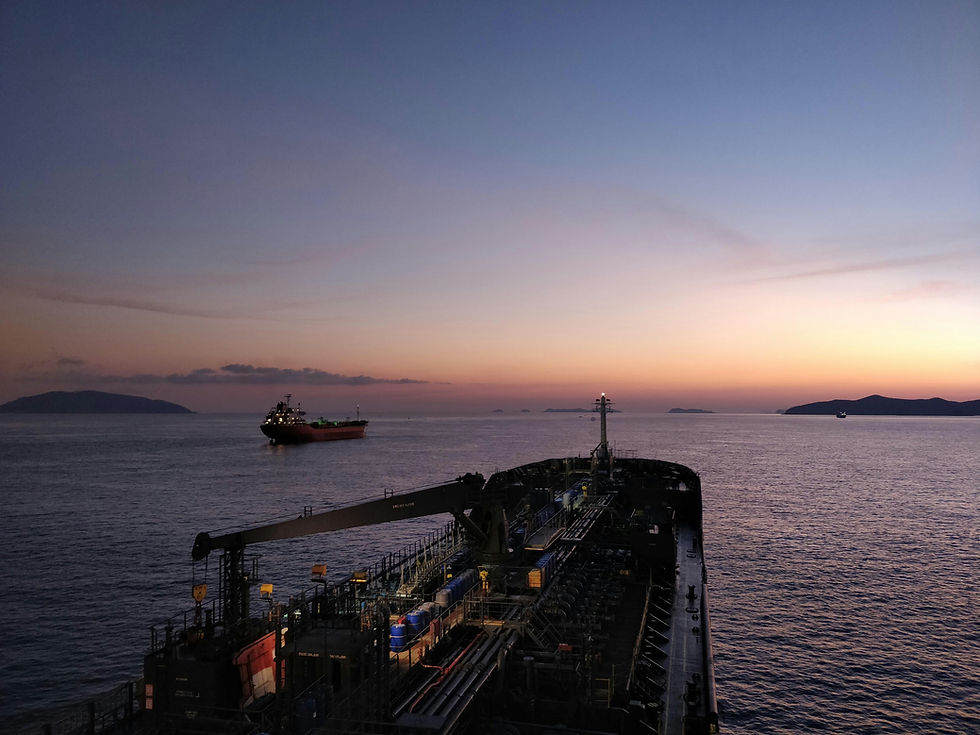
At its narrowest point The Strait of Hormuz is scarcely 20 miles wide. Only two ships can cross at any one time. And it’s eminently defensible.
It should have been obvious to the White House that the Iranians would wield their biggest weapon – the Strait itself – if their country ever came under attack.
After all, that’s exactly what they’ve been doing in various guises for 500 years or more, as soon as it became clear that this notorious bottleneck in global trade was a natural strategic asset that could be deployed at will.
And now they’re doing it again.
To summarise the chaos Tehran has created by firing a few rockets: instead of well over 100 ships a day sailing serenely down the strait, a nervous few are dribbling through, most under escort, at the behest of Iran, while thousands lie at anchor. As 20 percent of the world’s oil and gas is blocked, the energy security of scores of countries has come under threat.
The passage of other vital commodities has stopped. The world’s largest oil flow has been interrupted.
Fear in the shipping lanes
As maritime experts point out, the Iranians are sowing fear into the shipping world. Simply by threatening to blow up tankers — which are, after all, floating bombs — maritime insurance has gone sky high and set in train the string of events that has inevitably sent petrol prices soaring.
A maritime analyst at Spain’s CISDE University, defence specialist Rafael Muñoz Abad, writes:
“Fear is the [invisible] force behind the closure of the Strait of Hormuz… the fear of shipowners and fleet operators of losing their floating assets, their vessels. The lifeblood of the global economy.”
A history of control and conflict
This is ancient history for Iranians. They fought the Portuguese in the sixteenth century for control of the strait, in a period when it was the sea route for other valuable commodities — spices, silk, pearls and Arabian horses.
As the EBSCO library reveals, the Ottoman Empire’s Topkapi files show that from about 1515 the Portuguese essentially ran the strait from a fortress and customs house that they built on the little island of Hormuz. They extracted customs revenues and tolls from passing ships.
Eventually, in an alliance with the English in the form of the East India Company, which wanted valuable trading rights, the Safavid Persian Empire (as it was then) expelled the Portuguese in 1622 and took back the strait.
Iran has little reason to love the West. In 1951, when one of the nation’s heroes, the reforming prime minister Mohammad Mossadegh, nationalised the oil industry after years of exploitation by Anglo-Persian Oil (later BP), Britain despatched the Royal Navy to blockade Iran’s oil exports.
In 1953, an MI6- and CIA-backed coup overturned Mossadegh and reinstalled the West-friendly shah, Mohammad Reza Pahlavi. Framed for treason, Mossadegh spent the rest of his life under house imprisonment following sham trials orchestrated by the US — an injustice for which the Barack Obama administration has apologised.
It was only in 1979, when the Iranian Revolution overthrew the shah, that the country formally claimed authority over the Strait of Hormuz. Since then Iran has been at constant loggerheads with the US, albeit more of a victim than an aggressor.
The US joined Saddam Hussein’s Iraq after it invaded Iran in 1980, triggering the eight-year “tanker war” in the strait. Its attempts to develop nuclear weapons after 2000 brought down heavy economic sanctions from the US and European allies.
Over the years “Death to America” has become almost a national slogan.
Power, isolation and escalation
However, Iran has an unfortunate ability to alienate just about everybody in its neighbourhood. For the last decade it has been harassing and seizing foreign-flagged ships in the strait. Thousands of rockets have been pointlessly fired at its mortal enemy, Israel.
Bigoted clerics preach hate for the West and enforce a primitive anti-female culture.
But now the boot is on Iran’s foot. It is clamping an even tighter hold on its prime weapon and making even more dire threats.
In March a top official in the regime railed:
“The strait is closed. If anyone tries to pass, the heroes of the Revolutionary Guards and the regular navy will set those ships ablaze.”
Unfortunately, they have the muscle to do so. According to experts at the Brookings Institution, Iran has stockpiled an arsenal of up to 6,000 mines and a hundreds-strong fleet of attack craft, including midget submarines, among other weaponry that can create havoc.
If you’re interested in seeing the new articles as soon as they come out, explore my latest writing on SubStack here: https://historyrepeatswithselwyn.substack.com/
Or, if this perspective is of interest and you'd like to chat more, please get in touch.


Comments